
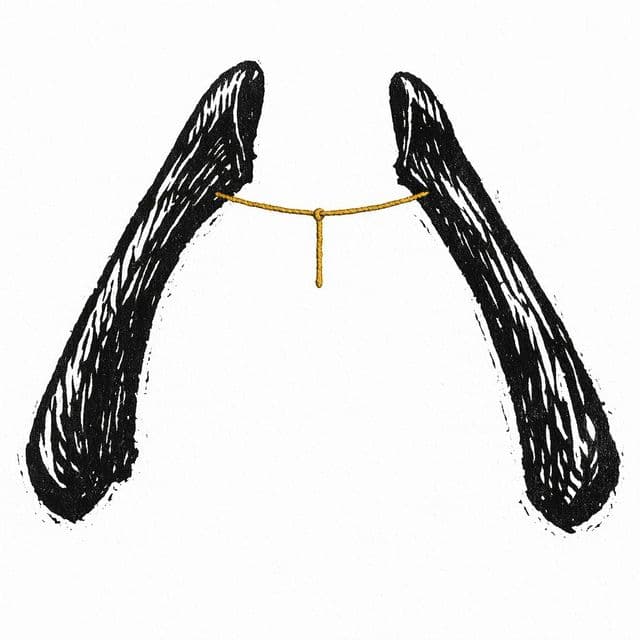
Hume's guillotine: why you can't get an ought from an is
David Hume's observation that no set of factual claims can, by itself, justify a value judgment — and how much everyday 'the science says we should' reasoning quietly smuggles across that gap.
Listen in the Fylom app.
Deductive logic cannot introduce a moral conclusion that was not already present in the factual premises.
Hume argues that moral distinctions arise from human sentiments rather than from reason or nature alone.
Scientific data remains indifferent until human priorities and value judgments are applied to the findings.
Bridge words like optimal or efficient often hide moral choices under the guise of technical requirements.
John Searle attempted to bridge the gap by using institutional facts like the social promise of money.
Science can identify the most effective way to reach a goal but cannot prove the goal is obligatory.
- 01Intro1 min
- 02The Discovery in the Treatise2 min
- 03The Logic of the Guillotine3 min
- 04Smuggling Values into Science3 min
- 05Attempts to Bridge the Gap3 min
- 06Outro1 min
- Hume’s Moral Philosophy (Stanford Encyclopedia of Philosophy)
- Hume on Is and Ought | Issue 83 | Philosophy Now
- Is–ought problem
- Hume's Law: Why You Can't Derive Ought from Is
- https://assets.samharris.org/web/essentials/episode-companions/making-sense-of-foundations-of-morality.pdf
- Science vs. Politics: Hume's Guillotine | Libertarianism.org
- Ought and Is - First Things
- The Is-Ought Problem | The Engines of Our Ingenuity
- Hume’s Guillotine and Evolutionary Ethics: Evaluating Attempts to Overcome the Naturalistic Fallacy
- Is–ought problem
- Hume Texts Online
- David Hume: Moral Philosophy | Internet Encyclopedia of Philosophy
- Treatise > Book 3 - Hume Texts Online
- Hume’s Treatise, Book III, Parts I and 3 (excerpts)
- https://philarchive.org/archive/RUSHTP-2
- How to Derive "Ought" From "Is"
- Hume on Is and Ought | Issue 83 | Philosophy Now
Fylom generates episodes like this on any topic you're curious about.
Fylom episodes are researched, written, and voiced by AI. Automated checks help catch inaccuracies, but episodes aren't reviewed by a human and AI can still get things wrong. Treat them as a starting point, not a source of record — more in our accuracy disclaimer.