
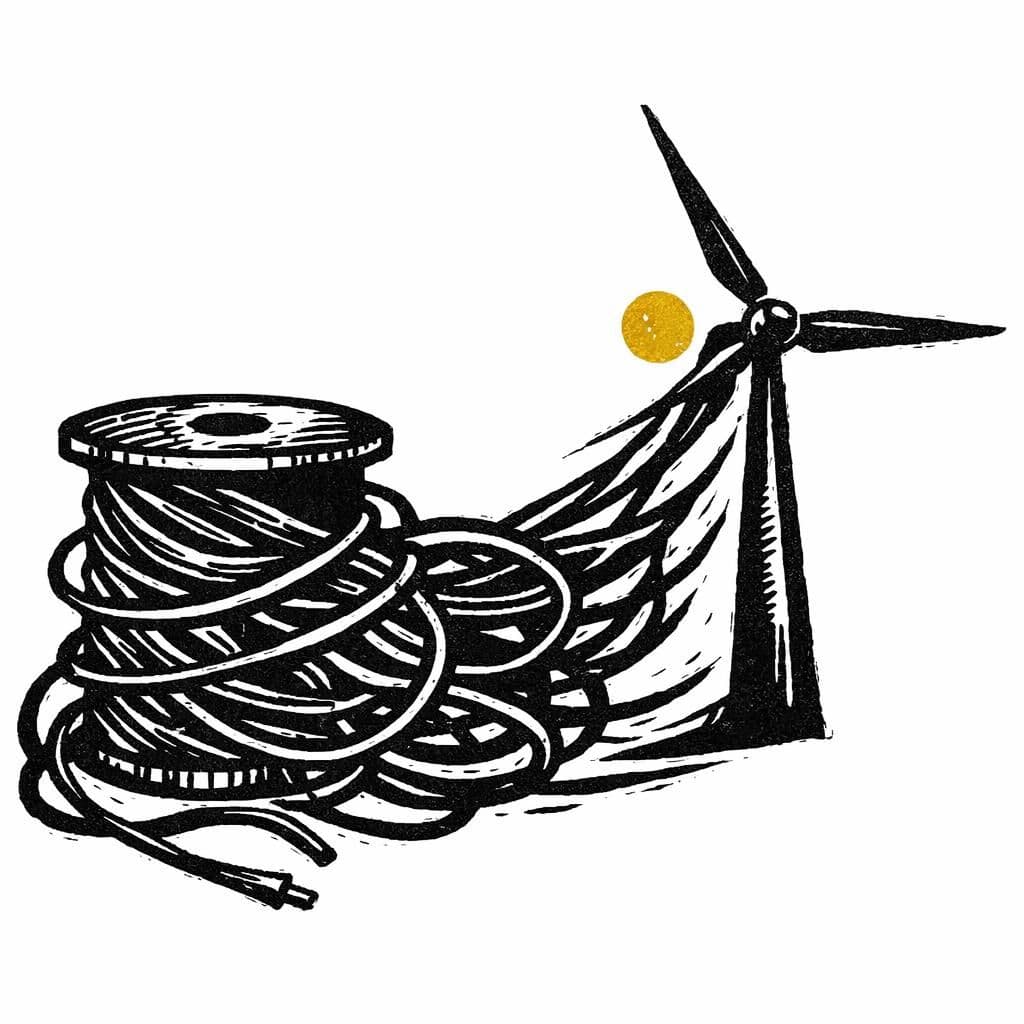
The Copper Wall: Why Denmark's Energy Islands Stalled
Denmark's ambitious plan to build the world's first artificial energy islands has hit a massive bottleneck. It isn't a lack of political will or funding, but a global shortage of the physical materials—specifically copper and high-voltage cabling—needed to connect these offshore hubs to the mainland.
Listen in the Fylom app.
Offshore wind farms require three times more copper than traditional coal-fired power plants.
The North Sea Energy Island project faces a three-year delay until twenty thirty-six due to rising costs.
Global demand for subsea cables has filled manufacturer order books through the late twenty-twenties.
Denmark's artificial island aims to connect power grids across Germany, Belgium, and the Danish mainland.
High-voltage direct current technology acts like a high-pressure water pipe to reduce energy loss over long distances.
The twenty-one billion dollar project failed to meet its requirement for commercial viability without government subsidies.
- 01Intro1 min
- 02The Vision of the Artificial Island2 min
- 03The Physical Bottleneck: HVDC and Copper3 min
- 04Economic Realities and the 2024 Delay2 min
- 05The Global Implications for Net Zero2 min
- 06Outro1 min
Fylom generates episodes like this on any topic you're curious about.
Fylom episodes are researched, written, and voiced by AI. Automated checks help catch inaccuracies, but episodes aren't reviewed by a human and AI can still get things wrong. Treat them as a starting point, not a source of record — more in our accuracy disclaimer.