
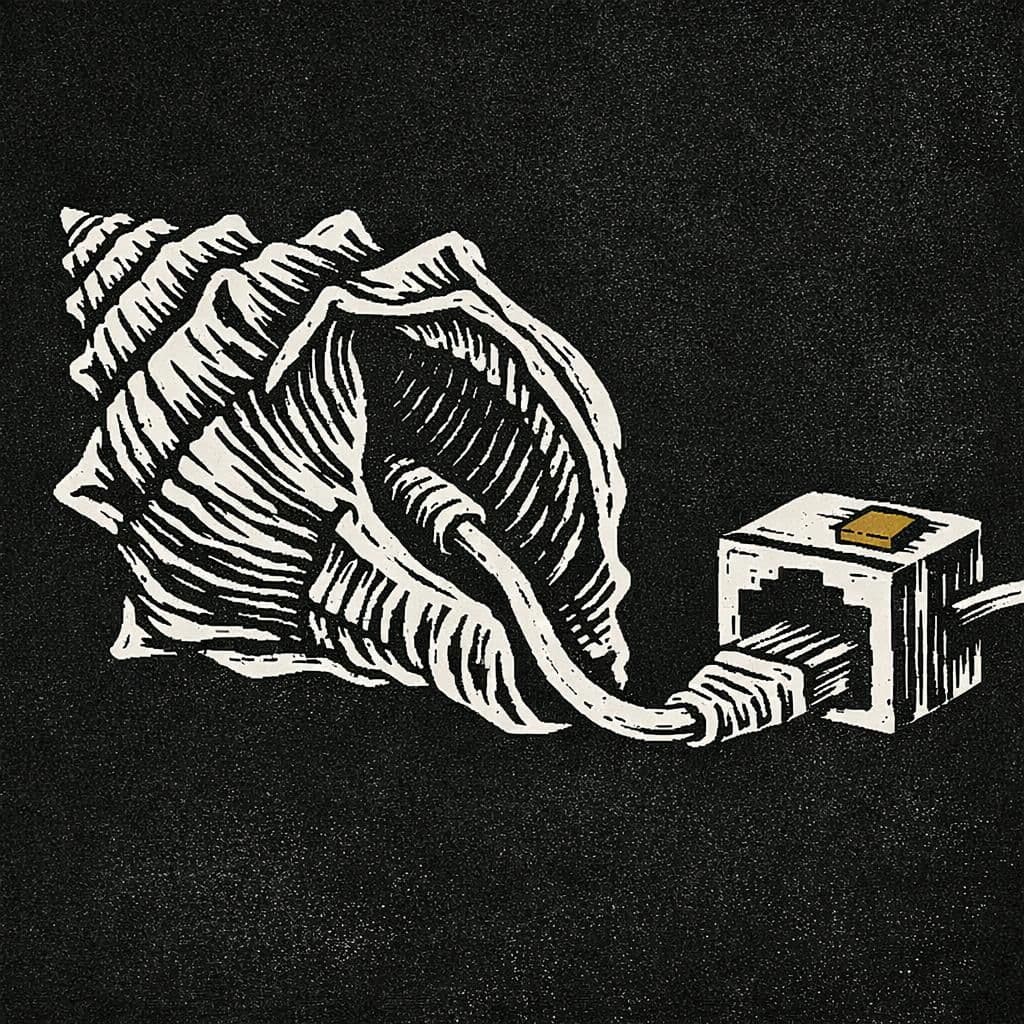
The Surfer Rebuilding the Internet with Sonar
After a week of devastating outages in the Pacific caused by cable damage, one engineer is deploying underwater acoustic modems to keep islanders connected. It explores how sound waves might replace light when the physical backbone of the web fails.
Listen in the Fylom app.
Ninety-nine percent of international data travels through undersea fiber cables vulnerable to anchors and volcanic eruptions.
Acoustic modems convert digital bits into pressure waves that travel kilometers through seawater using minimal energy.
Sound in seawater moves at fifteen hundred meters per second compared to light at three hundred thousand.
Low-cost acoustic bridges create temporary daisy-chains to reroute data when physical fiber optic lines fail.
Hybrid systems combine acoustic modems with blue-green lasers to achieve data speeds of several gigabits per second.
The underwater communications market is projected to reach four billion dollars by twenty twenty-six.
- 01Intro1 min
- 02The Fragility of the Glass Backbone2 min
- 03Acoustic Modems: Turning Sound into Data3 min
- 04The Engineer’s Solution: The Mesh in the Deep3 min
- 05The Future of a Hybrid Ocean2 min
- 06Outro1 min
Fylom generates episodes like this on any topic you're curious about.
Fylom episodes are researched, written, and voiced by AI. Automated checks help catch inaccuracies, but episodes aren't reviewed by a human and AI can still get things wrong. Treat them as a starting point, not a source of record — more in our accuracy disclaimer.