
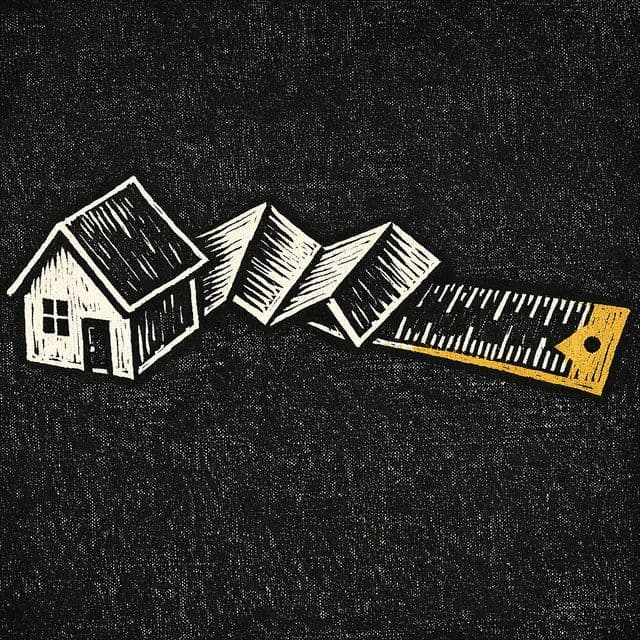
Can 3D-printed and prefab housing fix the housing crisis?
An examination of whether 3D printing and factory-built housing can scale to meet demand or if regulatory and financial bottlenecks remain the true barriers.
Listen in the Fylom app.
Parallel processing in modular construction can reduce total building timelines by ten to thirty percent.
Current three-D printing technology is largely restricted to single-story structures and requires human finishing trades.
Katerra's two-billion-dollar bankruptcy in twenty twenty-one highlights the risks of massive upfront capital in construction.
Land and soft costs account for forty percent of home prices in cities like San Francisco.
Panelized construction uses flat-packed walls and trusses to address the shortage of skilled framing crews.
Federal building codes give manufactured homes a significant volume advantage over local modular projects.
- 01Intro1 min
- 02The Factory Floor vs. The Muddy Lot3 min
- 033D Printing: Hype vs. Hard Concrete3 min
- 04The Regulatory and Land Bottleneck3 min
- 05The Path to Housing Abundance2 min
- 06Outro1 min
- Why factory-built housing hasn't worked yet, and why it might soon - CalMatters
- On the Verge of Housing Abundance - New America
- 3D Printed Homes Hit 200 Units: Hype vs Reality in 2026 | Buildermuse
- Can 3D printed and factory-built homes help tackle the US housing crisis? | AP News
- The Elusive Cost Savings of the Prefabricated Home
- Could New Ways of Building Make Housing More Affordable? — WSJ Your Money Briefing — Podcast Rex
- Where Are the Economies of Scale in Homebuilding? - The Property Chronicle
- The Shelter: Where Does 3D Printing Fit in the Housing Delivery Stack? | Proxima.Earth
- The Promise of the 3D-Printed Home Was Simple. The Reality Is Much More Complicated.
- Why Aren’t We 3D Printing More Houses? - MNTL
- Factory-built housing hasn’t taken off in California yet, but this year might be different | AP News
- California considering idea to boost factory-built housing | AP News
- It’s Expensive to Build Housing. California Lawmakers Say Factory-Built Is the Future | KQED
- CA considering a first of its kind idea to boost factory-built housing - CalMatters
- Factory-built housing hasn’t taken off in California yet, but this year might be different - Los Angeles Times
- Factory-built housing hasn’t taken off in California yet, but this year might be different | KPBS Public Media
- How 3D Printed Houses Get Made - Fine Homebuilding
- https://www.huduser.gov/portal/sites/default/files/pdf/3D-Concrete-Printed-Construction-Systems-Part-2.pdf
- Printing the Future of Modular Construction - Modular Building Institute
- 3D printing's new challenge: Solving the US housing shortage | AP News
- Testimony to the Select Committee on Housing Construction Innovation - Terner Center
- Building Affordability by Building Affordably: Exploring the Benefits, Barriers, and Breakthroughs Needed to Scale Off-Site Multifamily Construction.
- Disruptive Development: Modular Manufacturing in Multifamily Housing
Fylom generates episodes like this on any topic you're curious about.
Fylom episodes are researched, written, and voiced by AI. Automated checks help catch inaccuracies, but episodes aren't reviewed by a human and AI can still get things wrong. Treat them as a starting point, not a source of record — more in our accuracy disclaimer.