
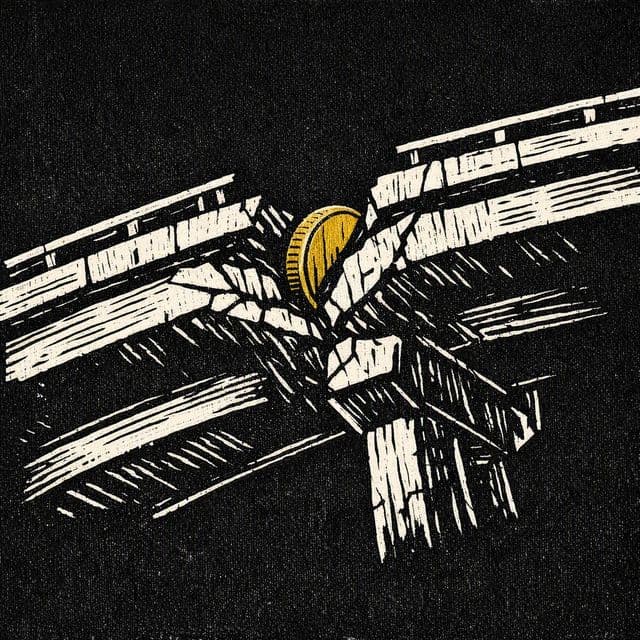
US Shifts Iran War Strategy to Oil Prices as Hormuz Blockade Continues
In the sixth month of the Iran war, the US government has pivoted its messaging to focus on domestic gasoline prices and household costs. This episode explores the economic implications of an indefinite blockade in the Strait of Hormuz and how global shipping disruptions are hitting American wallets.
Listen in the Fylom app.
Gasoline prices exceeding four dollars per gallon are driving the White House to use military action for economic repair.
The Strait of Hormuz handles one-fifth of global oil and liquefied natural gas supplies.
Every ten-dollar increase in crude oil prices results in a twenty-five-cent jump at the gas pump.
A one-cent increase in gasoline prices drains one point four billion dollars from annual consumer spending.
Fuel prices may not return to normal until late twenty twenty-six or twenty twenty-seven due to infrastructure damage.
Existing bypass pipelines in Saudi Arabia lack the capacity to replace maritime flow through the strait.
- 01Intro1 min
- 02The Pivot to the Pump2 min
- 03The Hormuz Chokepoint2 min
- 04The Math of Inflation3 min
- 05The Long Road to Normal2 min
- 06Outro1 min
- Gas prices top $4 a gallon as Iran war escalates
- Iran war energy shock hits U.S. economy, gas and diesel climb
- Gasoline prices are still rising as the Iran war stretches into its third week
- US fuel prices to take 'months' to normalise after US-Iran ...
- Implications of the Iran war for U.S. inflation
- How the U.S.-Iran war could impact gas prices at the pump
- The Strait of Hormuz: Security Developments and Impacts on Oil ...
- 2026 Strait of Hormuz crisis - Wikipedia
- The Strait that Moves the Market: The 2026 Strait of Hormuz Crisis ...
- Strait of Hormuz Crisis 2026: Full Analysis | The Board
Fylom generates episodes like this on any topic you're curious about.
Fylom episodes are researched, written, and voiced by AI. Automated checks help catch inaccuracies, but episodes aren't reviewed by a human and AI can still get things wrong. Treat them as a starting point, not a source of record — more in our accuracy disclaimer.