
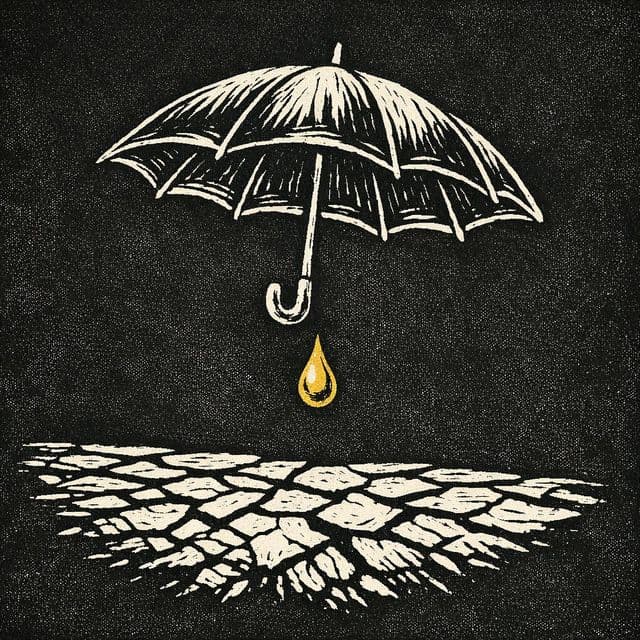
Solar geoengineering: the controversial plan to dim the sun
Deliberately reflecting sunlight to cool the planet could be cheap and fast — and catastrophically risky. Explore the science of solar geoengineering and why researchers fear both deploying it and leaving it on the table.
Listen in the Fylom app.
Sulfur dioxide mimics volcanic cooling by creating reflective aerosols that scatter solar radiation back into space.
Current commercial jetliners cannot reach the twenty kilometer altitude required for effective stratospheric aerosol injection.
Stopping a geoengineering program abruptly risks a termination shock where temperatures rise ten times faster than normal.
Atmospheric cooling from solar management could disrupt the South Asian monsoon and harm Indian agriculture.
A polar-only deployment by twenty forty would cost an estimated thirty-five billion dollars.
Solar geoengineering acts as a thermal brake but cannot prevent the ongoing issue of ocean acidification.
- 01Intro1 min
- 02The Volcanic Blueprint3 min
- 03The Engineering Gap3 min
- 04Geopolitical Chaos and Termination Shock3 min
- 05The Lesser of Two Evils2 min
- 06Outro1 min
- Hacking the atmosphere: Geoengineering gets a reality check | MIT Technology Review
- Geoengineering still faces major engineering challenges | MIT Technology Review
- Private companies want to geoengineer the sky. The rain billions of people depend on could be disrupted - ABC News
- Will the world ever be ready for solar geoengineering?
- Scientists could dim the Sun as a quick fix for the climate crisis. Here's why it could cause global chaos | BBC Sky at Night Magazine
- Solar Geoengineering To Cool the Planet: Is It Worth the Risks?
- Should we block some sunlight to cool the planet?
- Bold, Almost Reckless: Israeli Scientists Seek to Block Solar Radiation in a Radical Climate Experiment - Science & Health
- Scientists warn solar geoengineering to dim the Sun - Pakistan Today
- Startups want to cool Earth by reflecting sunlight : The Sunday Story : NPR
- Engineering and logistical concerns add practical limitations to stratospheric aerosol injection strategies | Scientific Reports
- Self
- How Hard Is It to Dim the Sun? – State of the Planet
- ACP - Stratospheric residence time and the lifetime of volcanic stratospheric aerosols
- Solar radiation modification: NOAA State of the Science factsheet
- https://davidkeith.earth/wp-content/uploads/2024/09/Parson-and-Keith-2024-Solar-Geoengineering-History-Methods-Governance.pdf
- Stratospheric Aerosol Injection (SAI)
- An interactive stratospheric aerosol model intercomparison of solar geoengineering by stratospheric injection of or accumulation-mode sulfuric acid aerosols
- An assessment of the infrastructural and temporal barriers constraining a near-term implementation of a global stratospheric aerosol injection program
- Low-Altitude High-Latitude Stratospheric Aerosol Injection Is Feasible With Existing Aircraft
- Review of possible very high-altitude platforms for stratospheric aerosol injection - IOPscience
- Cost analysis of stratospheric albedo modification delivery systems - IOPscience
- The potential environmental and climate impacts of stratospheric aerosol injection: a review - Environmental Science: Atmospheres (RSC Publishing)
- One Atmosphere: An Independent Expert Review on Solar Radiation Modification Research and Deployment
- Who Could Deploy Stratospheric Aerosol Injection? The United States, China, and Large‐Scale, Rapid Planetary Cooling
- An assessment of the infrastructural and temporal barriers constraining a near-term implementation of a global stratospheric aerosol injection program - IOPscience
Fylom generates episodes like this on any topic you're curious about.
Fylom episodes are researched, written, and voiced by AI. Automated checks help catch inaccuracies, but episodes aren't reviewed by a human and AI can still get things wrong. Treat them as a starting point, not a source of record — more in our accuracy disclaimer.