
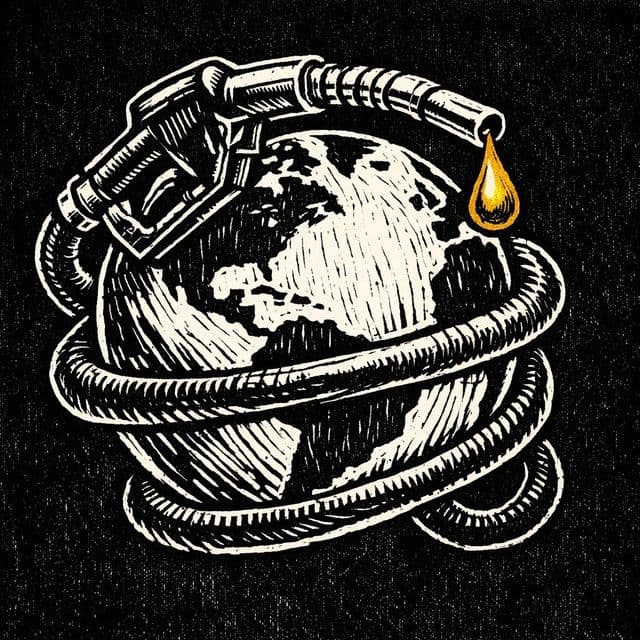
The petrodollar and the power of pricing oil in dollars
How the arrangement to price global oil in US dollars entrenched the dollar's dominance and handed the United States extraordinary financial leverage — and what could unwind it.
Listen in the Fylom app.
The nineteen seventy-four Riyadh agreement established that Saudi oil exports would be priced exclusively in dollars.
Foreign demand for United States Treasuries through petrodollar recycling helps keep domestic interest rates lower.
The dollar accounts for nearly sixty percent of global foreign exchange reserves and eighty percent of oil trade.
The United States uses its influence over the SWIFT system to disconnect sanctioned nations from financial grids.
China launched yuan-denominated crude oil futures in twenty eighteen to bypass the traditional dollar-based energy system.
New digital corridors like Project mBridge allow central banks to facilitate direct sovereign payments without the dollar.
- 01Intro1 min
- 02The 1974 Riyadh Handshake2 min
- 03The Mechanics of Petrodollar Recycling3 min
- 04The Dollar as a Geopolitical Weapon3 min
- 05Cracks in the Foundation3 min
- 06Outro1 min
- The U.S. and Saudi Arabia Since the 1930s
- How the petrodollar regime came to be, and what losing it would ...
- What happens if the petrodollar system ends?
- Trading in the shadows: Opaque energy deals challenge the petrodollar
- U.S. dollar dominance, reserve currency status, debated amid Iran war
- Petrodollars and Their Impact on the U.S. Dollar and Global Economy
- Unpacking The "Petrodollar War Theory": News Article
- Petrodollar History: From The 1974 Oil Deal To Today’s Shift
- The Petrodollar: Explained - IMPRI Impact And Policy Research ...
- The Petrodollar System Explained: How Oil, the Dollar, and US Treasuries Are Linked
- THE UNRAVELLING ORDER: DE-DOLLARISATION, GEOPOLITICAL REALIGNMENT, AND THE STRATEGIC USE OF FINANCIAL POWER
- 'MILESTONE' PACT IS SIGNED BY U.S. AND SAUDI ARABIA
- How the petrodollar regime came to be, and what losing it would mean for the U.S. | TPR
- Petrodollars: Myth and Reality | Council on Foreign Relations
- The Deal That Keeps the Oil Flowing | Epicenter - Harvard University
- The untold story behind Saudi Arabia's 41-year U.S. debt secret
- Enter Finance
- How the petrodollar regime came to be, and what losing it would mean for the U.S.
- The untold story behind Saudi Arabia’s 41-year secret debt | The Independent | The Independent
- Petrodollar recycling
- Follow the Money: The Political Economy of Petrodollar Accumulation and Recycling
- https://theses.gla.ac.uk/82854/1/2022SmithRCPhD.pdf
- How the petrodollar regime came to be, and what losing it would mean for the U.S. | KOSU
- The Petrodollar, Explained: Why It's Cracking
- 'Hard to unseat the king': Iran's control of Hormuz may not be end of petrodollar | Middle East Eye
- How the U.S.‑Israel war against Iran is exposing the limits of the petrodollar system
- Petrodollar Explained: How Oil Built the Dollar’s Global Dominance — The Middle East Insider
- Bretton Woods and the Nixon Shock · Since 1971
- How the petrodollar regime came to be, and what losing it would mean for the U.S. | WLRN
- The High Stakes of Economic Diplomacy in 1974 - BullsEye
Fylom generates episodes like this on any topic you're curious about.
Fylom episodes are researched, written, and voiced by AI. Automated checks help catch inaccuracies, but episodes aren't reviewed by a human and AI can still get things wrong. Treat them as a starting point, not a source of record — more in our accuracy disclaimer.