
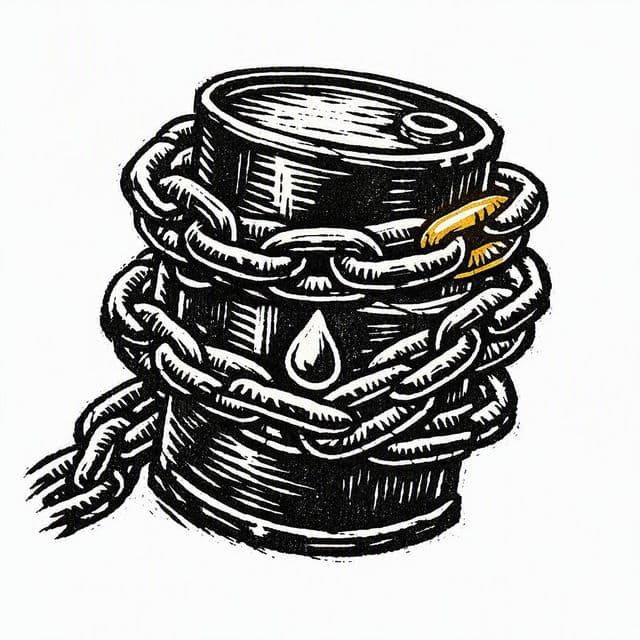
The Hundred-Ship Siege: Inside the Naval Blockade of Iran
U.S. officials reveal that a naval blockade of Iran's southern ports has redirected or turned away roughly one hundred vessels since April twenty twenty-six, significantly impacting oil revenue. This episode investigates the mechanics of this maritime siege, its historical precedents in economic warfare, and the risks it poses to the global energy market.
Listen in the Fylom app.
The United States Navy redirected one hundred commercial vessels and intercepted forty-one tankers since April twenty twenty-six.
Iran lost four point eight billion dollars in oil revenue within the first two months of the blockade.
Physical naval barriers prevent bribery and evasion more effectively than traditional financial sanctions.
Global oil prices reached ninety dollars per barrel by mid-twenty twenty-six due to maritime shipping risks.
The blockade intercepted sixty-nine million barrels of oil to force trade-offs between military and domestic spending.
Rising insurance premiums and freight rates created economic friction across the entire global energy sector.
- 01Intro1 min
- 02The Mechanics of the Siege2 min
- 03The Financial Toll3 min
- 04Lessons from the History of Economic Warfare3 min
- 05Global Contagion and the Final Settlement2 min
- 06Outro1 min
- No ships in, no revenue out: US says it's turned back 100 ...
- 100 ships redirected amid naval blockade of Iran ports ...
- CENTCOM reports 108 commercial vessels turned away under Iran ...
- U.S. Forces to Resume Naval Blockade Against Iran - centcom
- Why and how is US blockading Iranian ports in Strait ...
- US fires at oil tanker as new Iran blockade begins
- What to expect after the US reimposes naval blockade on Iran’s ports?
- The U.S. Naval Blockade is Working and Effective — FAQs and Key ...
- US can keep naval blockade on Iranian ports "indefinitely," ...
- Naval Blockades in Peace and War: An Economic History ...
- = r,;«^
- Theories of Naval Blockades and Their Application in the ...
- Economic Warfare: The Union Blockade in the Civil War
- Naval Blockades in Peace and War: An Economic History Since 1750 (review)
- Technology and Naval Blockade
- The Blockade of Confederate Ports, 1861–1865
- "Theories of Naval Blockades and Their Application in the ...
- A Survey of the International Law of Naval Blockade
- 3 things to know about naval blockades as U.S. begins patrols in the Strait of Hormuz
- World War I And After
- Naval Blockade
- Union blockade - Wikipedia
Fylom generates episodes like this on any topic you're curious about.
Fylom episodes are researched, written, and voiced by AI. Automated checks help catch inaccuracies, but episodes aren't reviewed by a human and AI can still get things wrong. Treat them as a starting point, not a source of record — more in our accuracy disclaimer.