
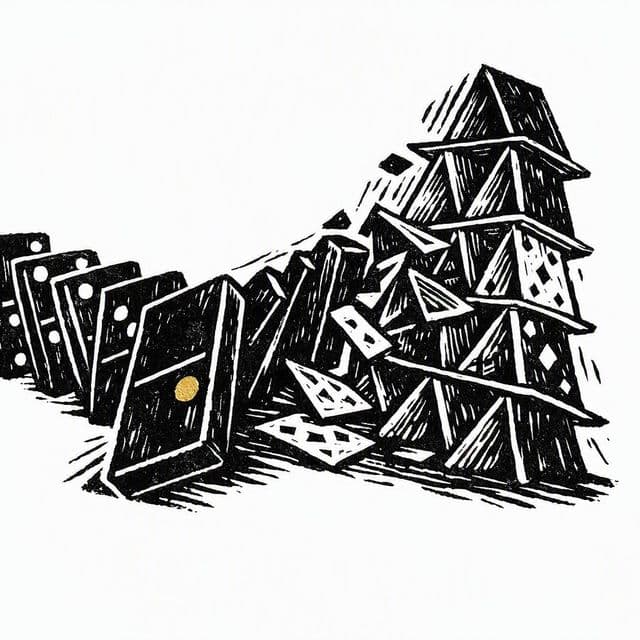
The Trader Who Broke Barings Bank From Singapore
In 1995 a single trader named Nick Leeson ran up losses on a hidden account that quietly destroyed a 233-year-old bank that had once financed the Louisiana Purchase. This is the story of how one unwatched desk, a secret error account numbered 88888, and a bet on the Nikkei toppled an institution older than most nations. It's a lesson in how invisible risk hides inside places everyone assumes are safe.
Listen in the Fylom app.
Nick Leeson hid massive trading losses by managing both the front and back office functions in Singapore.
Account eighty-eight thousand eight hundred eighty-eight was used to conceal a growing deficit from London executives.
The bank mistakenly prepared bonus payments based on fraudulent profit reports while actual losses exceeded its capital.
The January seventeen, nineteen ninety-five earthquake in Japan triggered a market crash that destroyed Leeson's positions.
Barings Bank collapsed after total losses reached eight hundred thirty million pounds in February nineteen ninety-five.
A lack of internal oversight allowed one trader to act like a student grading their own exam.
- 01Intro1 min
- 02The Error Account2 min
- 03The Snowball Effect3 min
- 04The Earthquake and the End3 min
- 05The Anatomy of Failure2 min
- 06Outro1 min
- Collapse of Barings - Singapore - NLB
- Doubling: Nick Leeson's trading strategy - NYU Stern
- Bankruptcy of Barings Bank (1995) | Description, Nick Leeson, & Facts
- Barings Bank collapses from Nick Leeson's losses - Singapore - NLB
- bankruptcy of Barings Bank
- The Collapse of Barings Bank
- Barings collapse at 20: How rogue trader Nick Leeson ...
- Nick Leeson: Rogue Trader
- Barings Bank Collapse: One Trader, GBP 827M | Investing With ...
- Nick Leeson - Wikipedia
- Implications of the Barings Collapse for Bank Supervisors
- The Barings Collapse: A Regulatory Failure, or a Failure of Supervision
Fylom generates episodes like this on any topic you're curious about.
Fylom episodes are researched, written, and voiced by AI. Automated checks help catch inaccuracies, but episodes aren't reviewed by a human and AI can still get things wrong. Treat them as a starting point, not a source of record — more in our accuracy disclaimer.