
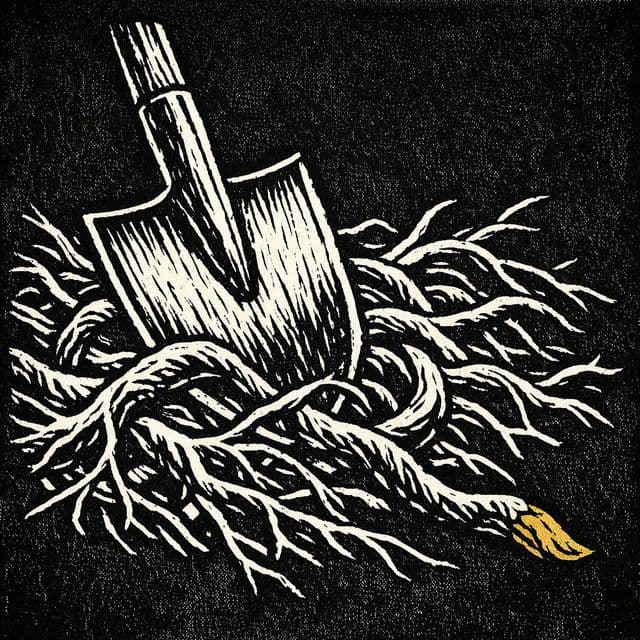
The Money Pit: Two Centuries of Sunk Costs on Oak Island
A team of searchers has spent over two hundred years and millions of dollars digging for treasure on a tiny island in Nova Scotia. This episode explores the story of the Oak Island Money Pit as a case study in the sunk cost fallacy—how past investments trap us into spending more even when the evidence suggests we should walk away.
Listen in the Fylom app.
Daniel McGinnis discovered man-made oak planks and non-native coconut fiber thirty feet underground in seventeen ninety-five.
A sophisticated flood tunnel system connects the pit to the sea to prevent deep excavation.
The two-century search has cost millions of dollars and six human lives without recovering verified treasure.
Modern searchers use sonic drills and seismic imaging despite the growing financial risk of failure.
The Concorde effect drives investors to fund non-viable projects to justify past unrecoverable expenses.
Loss aversion makes stopping the search feel like a permanent admission of financial defeat.
- 01Intro1 min
- 02The Pit That Never Ends2 min
- 03The Price of Persistence2 min
- 04The Mechanics of the Sunk Cost Fallacy3 min
- 05Why We Can't Walk Away2 min
- 06Outro1 min
- The Oak Island Money Pit: 200 Years of Treasure Hunting and the World's Most Famous Hole
- Sunk Cost in Engineering Economics
- Sunk Cost Fallacy: Definition, Examples & How to… — CASRAI
- Sunk-Cost Fallacy — How It Works, Explained Visually | Unseel
- The Sunk Cost Fallacy - Leadership IQ
- The Sunk Cost Fallacy in Decision-Making: Psychological Mechanisms …
- The Sunk Cost Fallacy
- Understanding the Sunk Cost Fallacy: Real-Life Business ...
- Sunk Cost Fallacy
- Sunk cost - Wikipedia
Fylom generates episodes like this on any topic you're curious about.
Fylom episodes are researched, written, and voiced by AI. Automated checks help catch inaccuracies, but episodes aren't reviewed by a human and AI can still get things wrong. Treat them as a starting point, not a source of record — more in our accuracy disclaimer.