
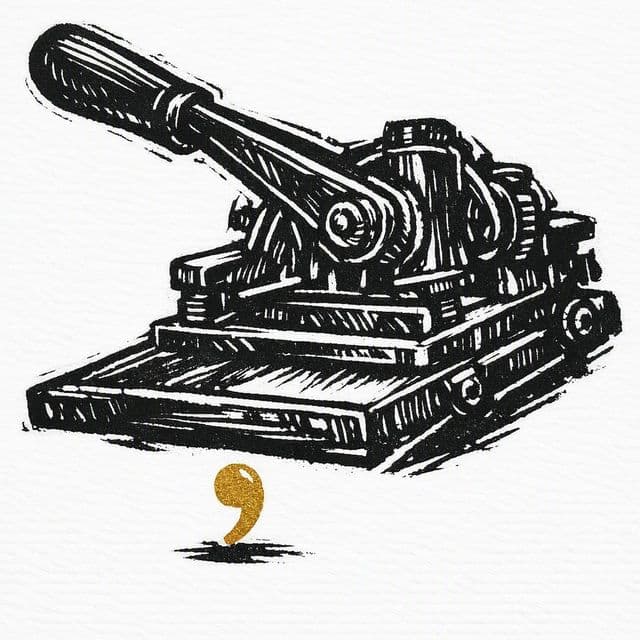
The Treasonous Comma: Roger Casement and the 1351 Act
In 1916, the fate of Sir Roger Casement hinged on the interpretation of a medieval statute. This episode explores the 'hanged on a comma' case, the 19th-century legal doctrine that punctuation wasn't actually part of the law, and how a printer's mark became a matter of life and death.
Listen in the Fylom app.
Roger Casement was convicted of treason based on a single comma in a thirteen fifty-one statute.
The court debated whether treasonous acts committed outside British soil were punishable by death.
Original medieval laws used hand-inked slashes called virgules instead of modern punctuation marks.
Nineteenth-century legal drafters avoided all punctuation to prevent printer errors from changing the law.
Judges prioritized the original Parliament Roll over printed versions to verify the statute's true meaning.
The defense argued that a comma incorrectly expanded the definition of a capital crime.
- 01Intro1 min
- 02The Myth of the Saved Life3 min
- 03The Medieval Syntax of Treason3 min
- 04The Doctrine of the Invisible Mark3 min
- 05The Legacy of the Unpunctuated Law2 min
- 06Outro1 min
- Commas don't kill people | Illinois
- Punctuation and the Interpretation of Statutes
- The Abolition of the Death Penalty in the United Kingdom
- The man hanged because of a comma
- [PDF] Punctuation of Statutes - UND Scholarly Commons
- [PDF] Should Lawyers Punctuate
- Drafting Without Punctuation? - Adams on Contract Drafting
- Errors in punctuation
- Punctuation for legal writing | - Law Explorer
- Full text of "Punctuation; its principles and practice" - Internet Archive
- Erroneous punctuation
- Defining 'Plain English' as an Aid to Legal Drafting
- TIPS FOR EFFECTIVE PUNCTUATION IN LEGAL WRITING*
Fylom generates episodes like this on any topic you're curious about.
Fylom episodes are researched, written, and voiced by AI. Automated checks help catch inaccuracies, but episodes aren't reviewed by a human and AI can still get things wrong. Treat them as a starting point, not a source of record — more in our accuracy disclaimer.