
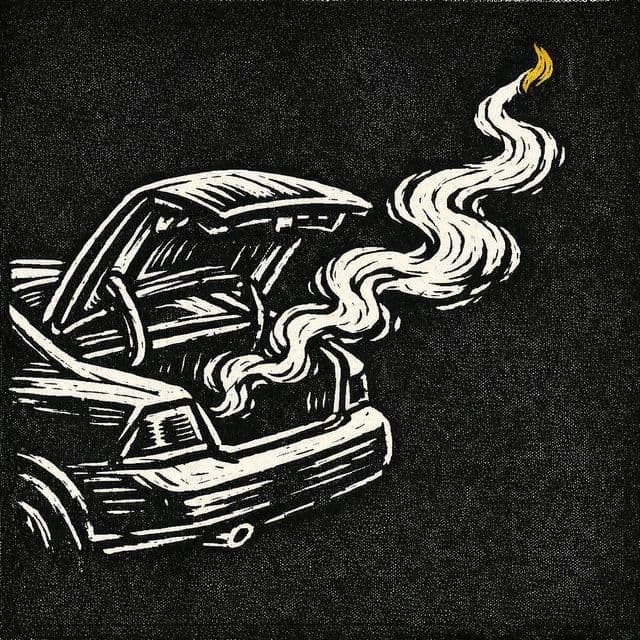
The Cadaver Dog That Testified in a Missing Body Case
In the Texas case of Trejos v. State, prosecutors secured a murder conviction without a corpse, relying in part on a cadaver dog that alerted to a car trunk. This episode examines the legal and scientific reliability of human decomposition detection dogs and the challenges of cross-examining a witness that cannot speak.
Listen in the Fylom app.
Texas law allows murder convictions without a body if canine alerts are backed by circumstantial evidence.
Specialized dogs can detect the scent of human remains six hundred sixty-seven days after removal.
Canine noses identify decomposition scents diluted to one drop in twenty Olympic-sized swimming pools.
The Clever Hans effect causes dogs to react to handler cues rather than actual scents.
Courts weigh high biological sensitivity against an eighty-five percent accuracy rate in controlled soil studies.
Defense attorneys use training logs and field records to challenge the reliability of canine alerts.
- 01Intro1 min
- 02The Texas Precedent3 min
- 03The Biological Sensor2 min
- 04The Reliability Gap3 min
- 05The Four-Part Foundation2 min
- 06Outro1 min
- Frank Jose Trejos v. The State of Texas--Appeal from 400th District Court of Ft. Bend County
- PEOPLE v. LANE (2014) | FindLaw
- Casetext Search + Citator
- Recent local cases prove murder convictions without a body possible, but difficult
- [PDF] Jurisprudence Section - 2014
- THE PEOPLE OF THE STATE OF ILLINOIS v. AURELIO MONTANO (2017) | FindLaw
- Forensic Canine White Papers
- Application of soil in Forensic Science: Residual odor and HRD dogs
- Microsoft Word - dissertation edit 4
- [PDF] Cadaver‐detection dogs: A review of their capabilities and the ...
Fylom generates episodes like this on any topic you're curious about.
Fylom episodes are researched, written, and voiced by AI. Automated checks help catch inaccuracies, but episodes aren't reviewed by a human and AI can still get things wrong. Treat them as a starting point, not a source of record — more in our accuracy disclaimer.