
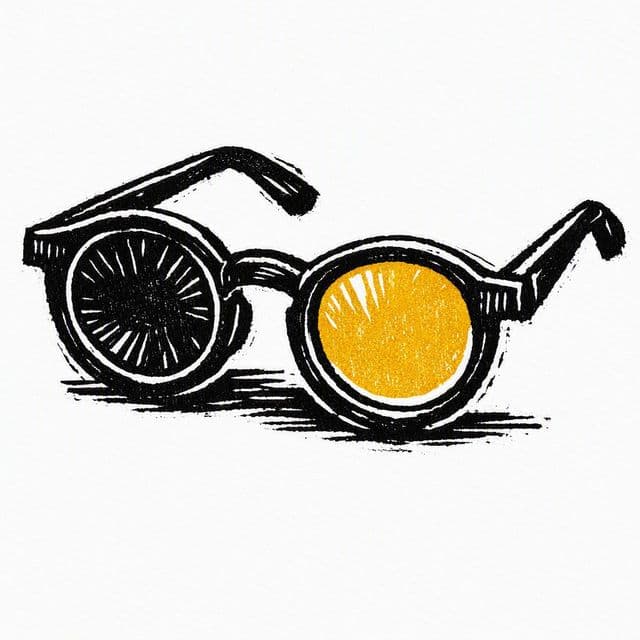
The Pseudo-Patients: When a Label Becomes a Lens
In 1973, eight healthy volunteers entered psychiatric hospitals claiming to hear voices, then acted completely normal. All were admitted, most diagnosed with schizophrenia, and none could easily convince staff they were sane. This episode explores how a single fabricated symptom created a diagnostic lens that distorted ordinary behavior, and why the study remains one of the most controversial critiques of psychiatric institutions.
Listen in the Fylom app.
Eight healthy people gained hospital admission by reporting hearing the words empty, hollow, and thud.
Nurses documented normal note-taking as pathological writing behavior due to the patients' initial labels.
Staff members frequently ignored direct questions and avoided eye contact with patients during the study.
One hospital identified eighty-three suspected impostors during a trial where zero pseudo-patients were actually sent.
Discharge labels used the term remission to maintain the original diagnosis despite the patients' normal behavior.
Modern diagnostic overshadowing causes clinicians to dismiss physical symptoms like chest pain as purely psychosomatic.
- 01Intro1 min
- 02The Three-Word Admission2 min
- 03The Lens of the Ward3 min
- 04The Counter-Experiment and the Critics2 min
- 05Archival Cracks and Modern Shadows3 min
- 06Outro1 min
- On being sane in insane places - PubMed
- On Being Sane in InsanePlaces
- [PDF] a critique of Rosenhan's "On being sane in insane places".
- On being sane in insane places: A supplemental report
- New Revelations About Rosenhan’s Pseudopatient Study: Scientific Integrity in Remission
- [PDF] Rosenhan Pseudopatient Study - Dr. John Ruscio
- [PDF] On being sane in insane places | Semantic Scholar
- The rise of the greedy-brained ape
- Diagnostic Overshadowing Harms Patients With ...
- Diagnostic overshadowing in mental health: a mixed‑methods ...
- Diagnostic overshadowing: An evolutionary concept analysis ...
Fylom generates episodes like this on any topic you're curious about.
Fylom episodes are researched, written, and voiced by AI. Automated checks help catch inaccuracies, but episodes aren't reviewed by a human and AI can still get things wrong. Treat them as a starting point, not a source of record — more in our accuracy disclaimer.