
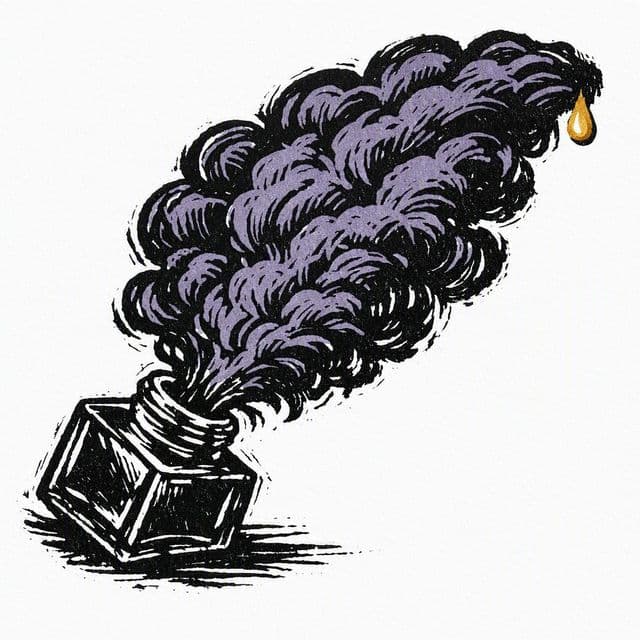
The Color That Belonged to No One Until 1856
In 1856, an eighteen-year-old chemist trying to synthesize a malaria drug accidentally created mauveine, the first mass-produced synthetic dye. This is the story of how a laboratory failure turned purple from a symbol of emperors into a fabric anyone could afford, launching the modern chemical industry.
Listen in the Fylom app.
William Henry Perkin discovered the first synthetic dye while failing to create a malaria treatment from coal tar.
The discovery transformed industrial coal waste into a vibrant purple liquid that bonded permanently to silk.
Synthetic dyes decoupled color production from land and climate, ending the reliance on crushed insects and roots.
Queen Victoria and Empress Eugénie sparked a global fashion craze known as the mauveine measles.
Perkin's coal-tar chemistry founded the modern pharmaceutical and plastics industries before he retired at thirty-six.
Modern textile dyeing now accounts for up to twenty percent of global water pollution.
- 01Intro1 min
- 02The Easter Vacation Accident2 min
- 03From Lab Curiosity to Industrial Patent3 min
- 04The Mauveine Measles2 min
- 05The Chemical Legacy and Cost2 min
- 06Outro1 min
- Mauveine
- William Henry Perkin
- The colourful chemistry of artificial dyes
- William Henry Perkin - Wikipedia
- William Henry Perkin and the world's first synthetic dye
- Mauveine: The First Industrial Organic Fine-Chemical
- Reconstructing the historical synthesis of mauveine from Perkin and Caro: procedure and details - Scientific Reports
- Perkin's purple - Royal Society
- 'Accidental chemist' who brought colour to Victorian society was 'far ...
- WH Perkin, Patent AD 1856 No 1984: A Review on Authentic Mauveine and Related Compounds
- The mystery of the Victorian purple dye
- Making Color
- Chemical archaeology with historical museum samples of ...
- Mauve - The Origins of Color - The University of Chicago Library
- The Accidental Invention of the Color Mauve - JSTOR Daily
- Mauve - Wikipedia
- In 1856, a student’s failed experiment accidentally created the first synthetic dye that changed the fashion industry - The Times of India
- aniline dyes | Fashion History Timeline
- A Study in Mauve: Unveiling Perkin!s Dye in Historic Samples
Fylom generates episodes like this on any topic you're curious about.
Fylom episodes are researched, written, and voiced by AI. Automated checks help catch inaccuracies, but episodes aren't reviewed by a human and AI can still get things wrong. Treat them as a starting point, not a source of record — more in our accuracy disclaimer.