

Culture & society
How we live now. Trends, movements, beliefs, and the forces quietly reshaping everyday life.
Open this topic in the app to listen.
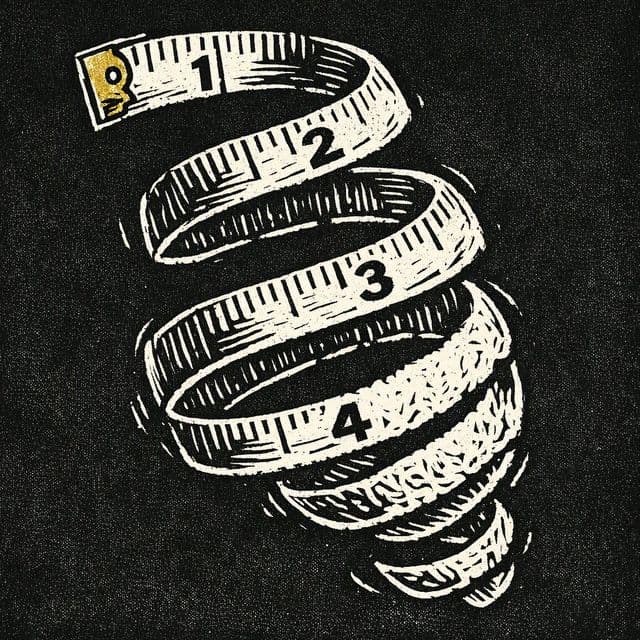
In the 1920s, industrial efficiency expert Lillian Gilbreth applied time-and-motion studies to the home, transforming the kitchen from a static room into a scientifically optimized workspace. Her 'Kitchen Practical' and the concept of circular routing established the ergonomic standards and work triangle layouts that still define modern domestic architecture today.
In 1920s Japan, Takeji Furukawa’s pseudoscientific claim that blood type reveals character became a national obsession, shaping dating, hiring, and self-image for millions. This episode traces how a debunked idea outlived its scientific rejection to become a persistent folk truth and social sorting mechanism.
In nineteen twenty-four, a Chicago department store faced a problem: newlyweds received piles of duplicate gifts and nobody knew what they wanted. The gift registry, born as a marketing scheme at Marshall Field’s, quietly rewired an entire ritual of generosity into a list-driven transaction we now treat as tradition.

Two Kentucky sisters wrote a simple classroom greeting in eighteen ninety-three that mutated into the most recognized song in the English language—and a copyright that earned millions for decades. This is the story of how a tune became private property and how a lawsuit finally set it free.

In eighteen seventy-eight, a Chicago fire company turned a hayloft pole into a high-speed escape route. This is the story of how Captain David Kenyon's improvised shortcut became a global symbol of firefighting that eventually outlived its own safety standards.
In the late twentieth century, Spain's traditional split workday faced an existential threat from globalization and air conditioning. This episode explores how the midday rest—often simplified as the siesta—became a central battlefield in the fight over who controls the rhythms of our daily lives.
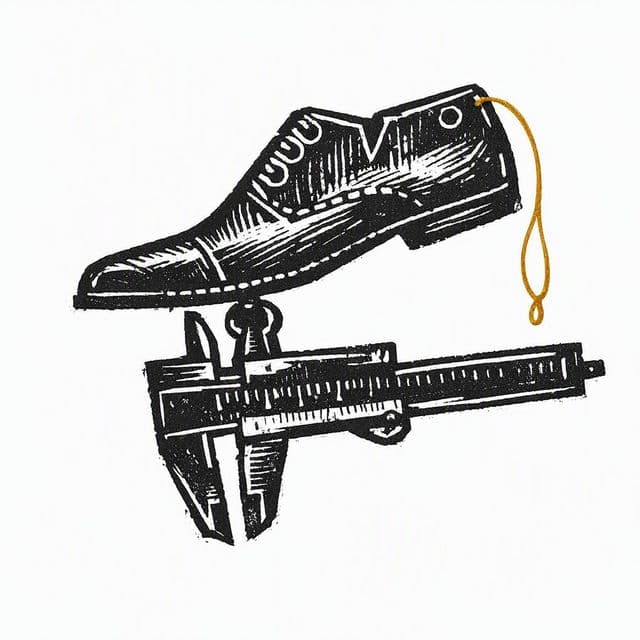
Before the 1880s, buying shoes was a gamble of cobblers and guesswork. This episode traces how Charles Brannock and Edwin Simpson turned the messy human foot into a standardized number, and why the industrial systems we trust still struggle to fit the diversity of human bodies.
In the eighteenth century, house numbering emerged not as a convenience for visitors, but as a powerful administrative tool. This episode explores how numbering transformed anonymous urban spaces into legible grids for taxation, policing, and conscription, tracing the journey from London's first numbered street in 1708 to the standardized systems that define modern life.
How we live now, and why. The stream explores third places and where community actually happens, how subcultures get absorbed by the mainstream, why every culture makes music, how languages come back from the dead, and why English became the world's default. Trends, movements, and the quiet forces reshaping everyday life — each one traced to its roots.
Fylom episodes are researched, written, and voiced by AI. Automated checks help catch inaccuracies, but episodes aren't reviewed by a human and AI can still get things wrong. Treat them as a starting point, not a source of record — more in our accuracy disclaimer.