
The Sailor Who Fell Two Miles Without a Parachute
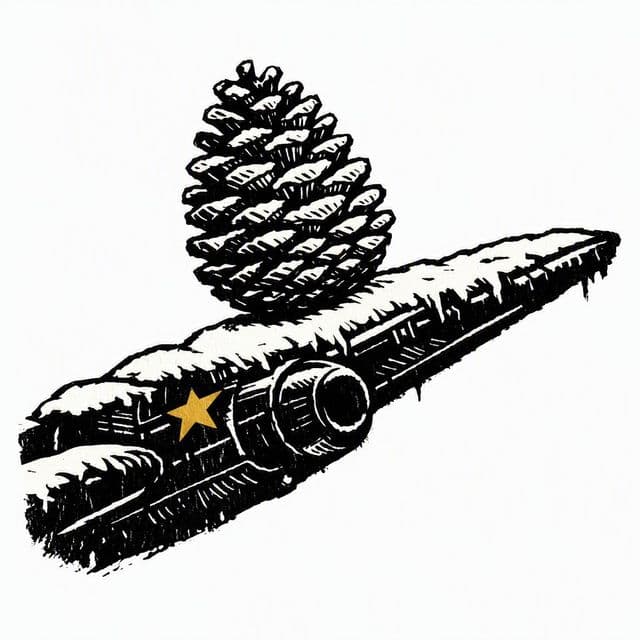
In 1944, a British tail gunner named Nicholas Alkemade jumped from a burning bomber at 18,000 feet with no parachute and walked away with barely a scratch. This is the story of how a snowy pine forest and pure geometry cheated physics, and how his captors refused to believe him until they found the wreckage. It's a meditation on the thin line between doom and dumb luck.
Listen in the Fylom app.
Nicholas Alkemade jumped from eighteen thousand feet after fire destroyed his parachute inside a Lancaster bomber.
Falling at over one hundred miles per hour, Alkemade experienced a sense of peace during the descent.
Flexible fir and pine branches acted as progressive brakes to absorb the kinetic energy of the fall.
Deep snowpack functioned as a final shock absorber to keep impact forces below lethal thresholds.
Alkemade survived a three-mile fall with only a sprained leg and minor scratches.
German authorities issued a formal certificate confirming the miracle after finding his unused parachute in the wreckage.
- 01Intro1 min
- 02The Choice in the Clouds2 min
- 03The Physics of the Forest3 min
- 04The Interrogation and the Proof3 min
- 05Outro1 min
- Nicholas Alkemade - Wikipedia
- The Miraculous Survival of Nicholas Alkemade
- Journal of Interdisciplinary Science Topics
- Nicholas Alkemade: Fell 18,000 Feet Without a Parachute
- Nicholas Alkemade | Aviation Historian | RAF Museum
- The RAF Airman Who Fell 18,000 Feet Without a Parachute and Survived: The Remarkable Story of Nicholas Alkemade
- Rear Gunner Flight Sergeant Nicholas S. Alkemade, 115 Squadron ...
- A burning plane and no parachute
- Rear Gunner Flight Sergeant Nicholas S. Alkemade, 115 ...
- Alkemade, Nicholas Stephen "Nick"
- Nicholas Alkemade – Wikipedia, wolna encyklopedia
Fylom generates episodes like this on any topic you're curious about.
Fylom episodes are researched, written, and voiced by AI. Automated checks help catch inaccuracies, but episodes aren't reviewed by a human and AI can still get things wrong. Treat them as a starting point, not a source of record — more in our accuracy disclaimer.