
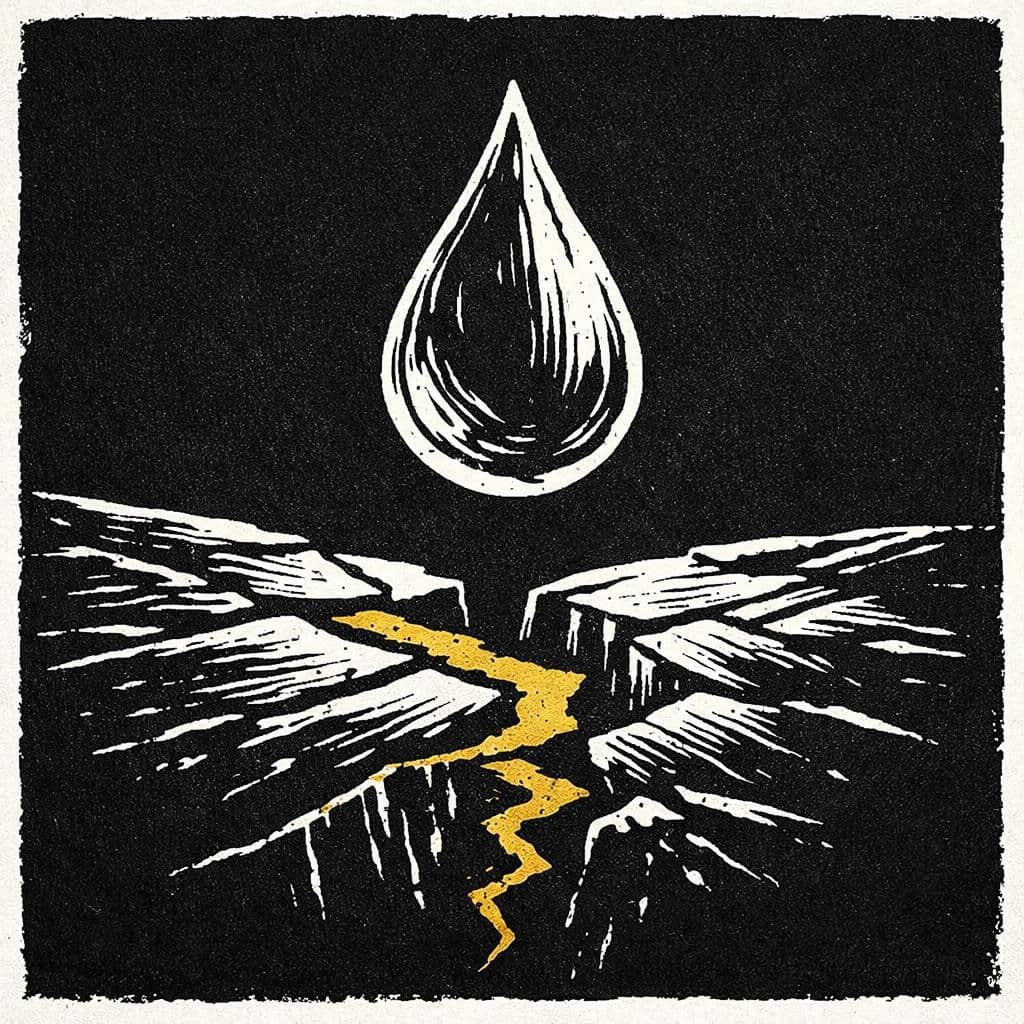
Leidenfrost Clouds: The Physics of Thermal Levitation
An exploration of the Leidenfrost effect, from its eighteenth-century discovery in a red-hot spoon to modern breakthroughs in electronic cooling and nuclear safety.
Listen in the Fylom app.
Water droplets survive thirty seconds on red-hot metal by creating a thin vapor barrier.
Vapor films between ten and one hundred micrometers thick allow droplets to hover with near-zero friction.
Saw-tooth surface textures act as microscopic turbines to steer droplets up inclines without external pumps.
Structured thermal armor uses eighty-micrometer pillars to prevent the boiling crisis in high-performance AI chips.
The Leidenfrost effect allows a wet hand to briefly touch molten lead without sustaining burns.
Trapping cryogenic liquids inside clothing destroys the protective vapor shield and causes immediate injury.
- 01Intro1 min
- 02The Red-Hot Spoon: Johann Leidenfrost’s Discovery2 min
- 03The Physics of the Hover: Pressure and Friction3 min
- 04Breaking the Barrier: Cooling High-Performance Electronics3 min
- 05Safety and Survival: From Nuclear Plants to Molten Lead3 min
- 06Outro1 min
Fylom generates episodes like this on any topic you're curious about.
Fylom episodes are researched, written, and voiced by AI. Automated checks help catch inaccuracies, but episodes aren't reviewed by a human and AI can still get things wrong. Treat them as a starting point, not a source of record — more in our accuracy disclaimer.