
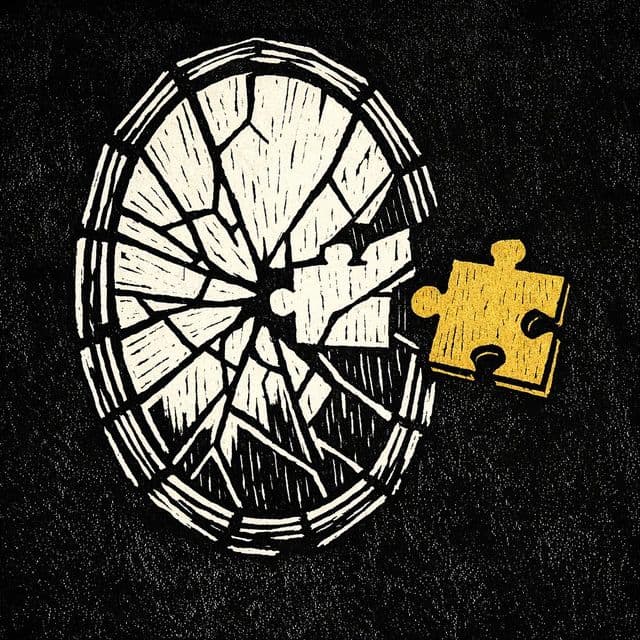
The replication crisis in psychology
When researchers tried to reproduce famous psychology experiments, a startling number failed. Explore which celebrated findings collapsed, which held up, and how the field is trying to fix how it does science.
Listen in the Fylom app.
Only thirty-six percent of psychology studies successfully replicated with statistical significance in a major hundred-study project.
Replicated studies showed effect sizes that were less than half as strong as the original published findings.
Ego depletion and power posing theories failed to hold up under large-scale, rigorous replication efforts.
P-hacking allows researchers to manipulate data analysis until they reach the desired point zero five significance level.
The file drawer effect hides unsuccessful studies, leaving only misleadingly positive results in the public record.
Pre-registration prevents researchers from changing their hypotheses after they have already seen the data results.
- 01Intro1 min
- 02The Reproducibility Project2 min
- 03The Fallen Giants: Ego Depletion and Power Posing3 min
- 04Why Science Breaks: P-Hacking and Incentives3 min
- 05The Path to Reform2 min
- 06Outro1 min
- Estimating the reproducibility of psychological science | Science
- Solving the Replication Crisis in Psychology: Insights from History and Philosophy of Science | University of Oxford Podcasts
- Is psychology suffering from a replication crisis? What does "failure ...
- The replication games: what are they, and how they may help solve a crisis : Planet Money : NPR
- The Scientific Process | Hidden Brain : NPR
- Episode 99: Power posing
- Roy Baumeister's willpower research was the most cited in psychology and then half of it failed to replicate
- The Replication Crisis in Psychology - Noba Project
- Experimental Social Psychology is Not a True Science - Replicability-Index
- The Stanford Prison Experiment: How a Famous "Truth" About Human Nature Came Apart | Atticus Li
- Results of many psychology experiments can't be duplicated, study ...
- The Reproducibility Project: Psychology (OSC 2015) — When The Field Replicated Itself And Found 39% | Atticus Li
- Estimating the reproducibility of psychological science
- Estimating the reproducibility of psychological science
- Massive International Project Raises Questions about the Validity of Psychology Research | Scientific American
- This is what happened when psychologists tried to replicate 100 previously published findings | BPS
- Comment on “Estimating the reproducibility of psychological science”
- A Multilab Preregistered Replication of the Ego-Depletion Effect - M. S. Hagger, N. L. D. Chatzisarantis, H. Alberts, C. O. Anggono, C. Batailler, A. R. Birt, R. Brand, M. J. Brandt, G. Brewer, S. Bruyneel, D. P. Calvillo, W. K. Campbell, P. R. Cannon, M. Carlucci, N. P. Carruth, T. Cheung, A. Crowell, D. T. D. De Ridder, S. Dewitte, M. Elson, J. R. Evans, B. A. Fay, B. M. Fennis, A. Finley, Z. Francis, E. Heise, H. Hoemann, M. Inzlicht, S. L. Koole, L. Koppel, F. Kroese, F. Lange, K. Lau, B. P. Lynch, C. Martijn, H. Merckelbach, N. V. Mills, A. Michirev, A. Miyake, A. E. Mosser, M. Muise, D. Muller, M. Muzi, D. Nalis, R. Nurwanti, H. Otgaar, M. C. Philipp, P. Primoceri, K. Rentzsch, L. Ringos, C. Schlinkert, B. J. Schmeichel, S. F. Schoch, M. Schrama, A. Schütz, A. Stamos, G. Tinghög, J. Ullrich, M. vanDellen, S. Wimbarti, W. Wolff, C. Yusainy, O. Zerhouni, M. Zwienenberg, 2016
- Psychology Finally Checked Its Work. Whoops.
- A Multilab Replication of the Ego Depletion Effect
- Sometimes a failure to replicate a study isn’t a failure at all | Science News
- False-Positive Psychology - Joseph P. Simmons, Leif D. Nelson, Uri Simonsohn, 2011
- Are most published research findings false? Trends in statistical power, publication selection bias, and the false discovery rate in psychology (1975–2017) | PLOS One
- One Decade Into the Replication Crisis, How Have Psychological Results Changed? - Paul C. Bogdan, 2025
- Challenging the N-Heuristic: Effect size, not sample size, predicts the replicability of psychological science | PLOS One
- One Decade Into the Replication Crisis, How Have Psychological Results Changed?
Fylom generates episodes like this on any topic you're curious about.
Fylom episodes are researched, written, and voiced by AI. Automated checks help catch inaccuracies, but episodes aren't reviewed by a human and AI can still get things wrong. Treat them as a starting point, not a source of record — more in our accuracy disclaimer.