
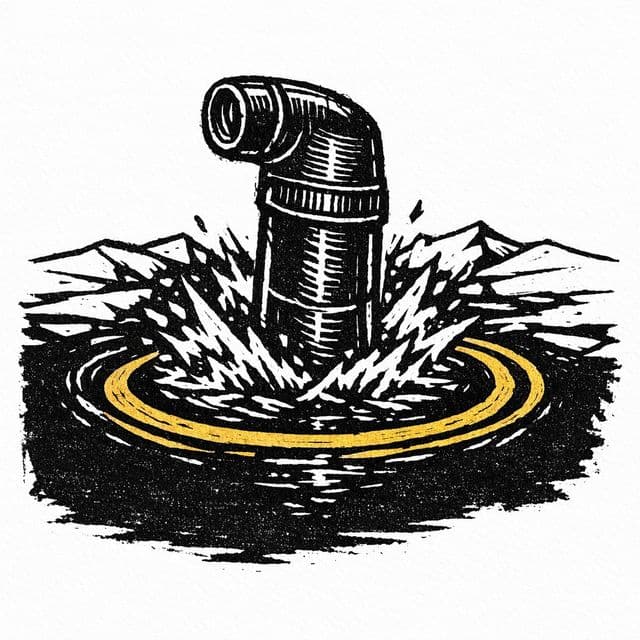
Vasili Arkhipov, the Soviet officer who refused to fire a nuclear torpedo
During the Cuban Missile Crisis, a submarine officer's lone refusal to authorize a nuclear strike quietly prevented catastrophe — how close the world came, and why almost no one knew.
Listen in the Fylom app.
Soviet submarine B-59 carried a secret ten-kiloton nuclear torpedo while trapped in one hundred twenty-two degree heat.
U.S. Navy practice depth charges were misinterpreted by the Soviet crew as a direct military attack.
Captain Savitsky ordered the nuclear weapon armed believing that World War Three had already begun.
Arkhipov’s experience with the K-nineteen nuclear disaster influenced his refusal to authorize the torpedo launch.
The three-signature protocol required unanimous consent from officers to fire the submarine's nuclear payload.
Soviet leadership classified the incident for forty years and initially viewed the mission as a failure.
- 01Intro1 min
- 02The Iron Coffin of the Sargasso Sea2 min
- 03The Ten-Kiloton Secret2 min
- 04The Argument That Saved the World3 min
- 05Forty Years of Silence2 min
- 06Outro1 min
- The Underwater Cuban Missile Crisis at 60 | National Security Archive
- How Vasili Arkhipov helped prevent nuclear war 60 years ago | Vox
- Vasily Arkhipov
- Vasili Arkhipov: The Soviet Officer Who Averted Nuclear War | History Hit
- Soviet submarine B-59
- [PDF] The Cuban Missile Crisis at Sea—Avoidance of Nuclear War Not ...
- The Man Who Saved the World | About the Episode - PBS
- Vasily Arkhipov - Wikipedia
- Vasili Arkhipov: The Man Who Saved the World
- What if the Cuban missile crisis went hot & Soviet sub B-59 had fired its torpedos? - History Undone | Acast
- Black Saturday Declassified | Naval History Magazine - June 2021 Volume 35, Number 3
- Cuban missile crisis, 60 years on: new papers reveal how close the world came to nuclear disaster
- The Underwater Cuban Missile Crisis: Soviet Submarines and the Risk of Nuclear War
- Soviet submarine B-59
- task to sail secretly from the base to the Cuban port of Mariel. The problem was that the speed of movement was set at twice the one that would allow the subs to travel secretly (in practice, to travel secretly, the diesel submarine could only be at the surface for about 1% of its overall time at sea). On the night of 01.10.1962, the submarines left the Kola Bay with the interval of 30 minutes and started their journey.During the transit to the Bahamas, there were three most dangerous anti-submarine barriers in terms of the likelihood of being discovered: on the border between the Barents and the Norwegian seas between Medvezhii Island and Nordkap; between Iceland and Faroe and Scottish Islands; and between Newfoundland and the Azores.During the transit, the weather and visibility generally were conducive to keeping the secrecy—stormy weather, low clouds, low visibility, snow squalls, rain.The first two barriers exhibited ordinary levels of anti-submarine activity, and the subs crossed them undiscovered.
- The Cuban Missile Crisis @ 60 The Most Dangerous Day | National Security Archive
- The Submarines of October
- The Cuban Missile Crisis @ 60 Nuclear Crisis Lasted 59 Days, Not Just 13 | National Security Archive
Fylom generates episodes like this on any topic you're curious about.
Fylom episodes are researched, written, and voiced by AI. Automated checks help catch inaccuracies, but episodes aren't reviewed by a human and AI can still get things wrong. Treat them as a starting point, not a source of record — more in our accuracy disclaimer.