
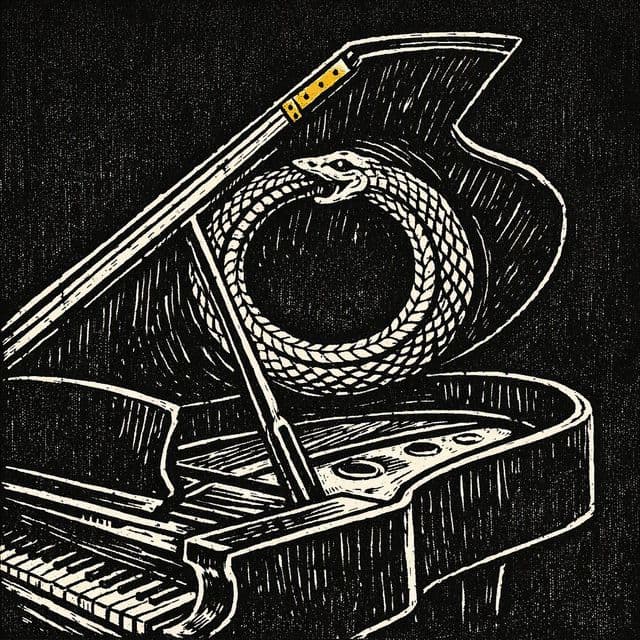
The Musician in the Perpetual Present
Clive Wearing, a brilliant British musicologist, contracted a viral infection that destroyed his ability to form new memories, leaving him trapped in a loop of awakening every few seconds. Yet, he could still play the piano and conduct with virtuosity, revealing a startling split between the memories we lose and the skills that survive in the body.
Listen in the Fylom app.
Clive Wearing lives in a perpetual awakening window lasting between seven and thirty seconds.
Brain damage from viral encephalitis destroyed Wearing's declarative memory while leaving his procedural skills intact.
Musical memory utilizes distributed neural circuits that bypass the damaged temporal lobe and hippocampus.
Wearing can still sight-read and lead choirs because music functions as an embodied physical state.
Amnesic patients can learn new skills through repetition despite having no conscious memory of practicing.
Wearing maintains an intense emotional bond with his wife despite losing his entire autobiographical narrative.
- 01Intro1 min
- 02The Seven-Second Loop2 min
- 03The Hands That Remember3 min
- 04Identity Beyond Narrative3 min
- 05Outro1 min
- Clive Wearing's Case: A Landmark in Memory and Neuropsychology
- Video: Clive Wearing | Case Study, Memory & Psychology
- Psy 3020 Final Project: The Case Study of Clive Wearing
- How can musicians keep playing despite amnesia?
- Preservation of musical memory in an amnesic professional cellist
- Music and Dementia: An Overview - - Practical Neurology
- Musical memory in a patient with severe anterograde amnesia - PMC
- Cognitive rehabilitation of amnesia after virus encephalitis: A case report
- The Man With The Seven Second Memory
- The World’s Most Extreme Case of Amnesia | Extraordinary People
- Oliver Sacks: Music and Amnesia
- Exploring the Relationship Between Music and Memory
- Clive Wearing - Wikipedia
- Meet the man with a 30-second memory transcript
Fylom generates episodes like this on any topic you're curious about.
Fylom episodes are researched, written, and voiced by AI. Automated checks help catch inaccuracies, but episodes aren't reviewed by a human and AI can still get things wrong. Treat them as a starting point, not a source of record — more in our accuracy disclaimer.