
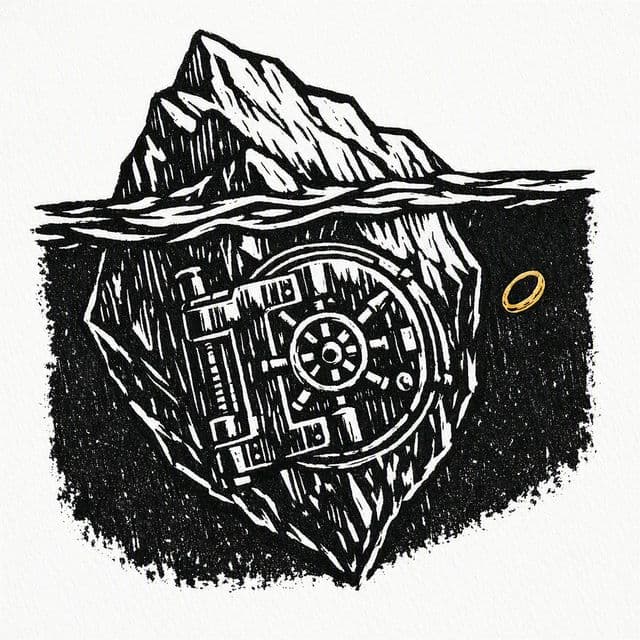
The Seed Vault That Assumes Civilization Falls
Deep in Arctic permafrost sits a vault built on the quiet assumption that agriculture will one day collapse somewhere on Earth. This episode traces how a backup plan for the world's crops became a working forecast of the futures we refuse to say out loud, and what its first real withdrawal revealed.
Listen in the Fylom app.
The Svalbard vault stores over one million seed samples using mountain permafrost for passive, low-maintenance cooling.
Depositors retain full legal ownership of their seeds through a unique black-box governance agreement.
The first seed withdrawal occurred in twenty fifteen to replace varieties lost during the Syrian conflict.
Regeneration efforts in Lebanon and Morocco prove the vault is a living backup rather than a static capsule.
Designing for collapse means building systems that function without modern power grids or complex global logistics.
Deciding which crops to save involves political choices that prioritize specific agricultural traditions over others.
- 01Intro1 min
- 02The Arctic Insurance Policy2 min
- 03The Aleppo Withdrawal3 min
- 04The Logic of Designing for Collapse3 min
- 05The Politics of the End2 min
- 06Outro1 min
- The History - Svalbard Global Seed Vault
- Svalbard Global Seed Vault
- Svalbard Global Seed Vault
- Svalbard Global Seed Vault
- What Seeds are in the Svalbard Global Seed Vault?
- Svalbard Global Seed Vault
- The Svalbard Global Seed Vault | The Multilateral System | FAO
- Svalbard Global Seed Vault
- Svalbard Global Seed Vault | PMI
- [PDF] Odds and Ends: Risk, Mortality, and the Politics of Contingency
- Pre-planning Transformation to Avoid Collapse--Is It Possible?
- TOCHI2004-24
- Collapse informatics and practice: Theory, method, and design
- CHI2012_Collapse_CameraReadyFinalClean
Fylom generates episodes like this on any topic you're curious about.
Fylom episodes are researched, written, and voiced by AI. Automated checks help catch inaccuracies, but episodes aren't reviewed by a human and AI can still get things wrong. Treat them as a starting point, not a source of record — more in our accuracy disclaimer.