
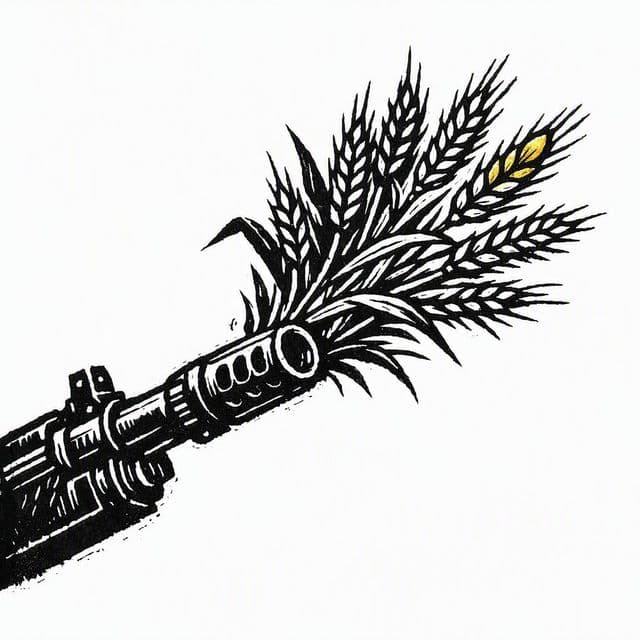
The Emu War: Australia's Great Avian Defeat
In 1932, the Australian military deployed soldiers with machine guns to cull tens of thousands of emus destroying farmland in Western Australia. The birds scattered, dodged, and outlasted the ammunition, forcing an embarrassing retreat that farmers never let the government forget. It's a story about the limits of military force against nature — and a nation's wounded pride.
Listen in the Fylom app.
Western Australian farmers requested military machine guns to stop twenty thousand emus from destroying wheat crops.
Major Meredith led a three-man army using Lewis guns designed for European trench warfare against birds.
Emus used sentinels to signal danger and scattered into small groups to avoid military fire.
The military expended nearly ten thousand rounds of ammunition to achieve only nine hundred eighty-six kills.
Dust and mechanical failures caused machine guns to jam during critical encounters with the emu flocks.
Australia eventually replaced military force with bounty systems and exclusion fencing to manage the emu population.
- 01Intro1 min
- 02The Wheatbelt Emergency2 min
- 03The Three-Man Army2 min
- 04Guerrilla Birds and Jammed Guns3 min
- 05The Ten-to-One Ratio2 min
- 06Fences and Folklore1 min
- 07Outro1 min
- Emu War - Wikipedia
- Emu War | Australia, Casualties, History, Summary, & Facts | Britannica
- The bizarre story of when Australia went to war with emus ...
- The Great Emu War
- The Great Emu War of 1932 | Everything You Need to Know!
- The Great Emu War: How Flightless Birds Beat the Australian Army
- The Great Emu War: A Bizarre Chapter in Australia‘s Ecological History - History Tools
- [PDF] The Great Emu War - www .ec -undp
- Emus once faced down the Australian army—and won
- In 1932, the Australian government deployed soldiers with two ...
Fylom generates episodes like this on any topic you're curious about.
Fylom episodes are researched, written, and voiced by AI. Automated checks help catch inaccuracies, but episodes aren't reviewed by a human and AI can still get things wrong. Treat them as a starting point, not a source of record — more in our accuracy disclaimer.