
The Nurse Who Counted Deaths and Redrew Medicine
In Crimea's military hospitals, more soldiers died from infection than battle wounds — and Florence Nightingale proved it with a radical circular diagram. This is the story of how a rose-shaped chart forced a stubborn government to accept that sanitation, not bullets, was the real killer.
Listen in the Fylom app.
Preventable diseases like cholera and typhus caused more British Army deaths than enemy combat in Crimea.
Florence Nightingale standardized medical record-keeping to replace anecdotal observations with rigorous forensic data.
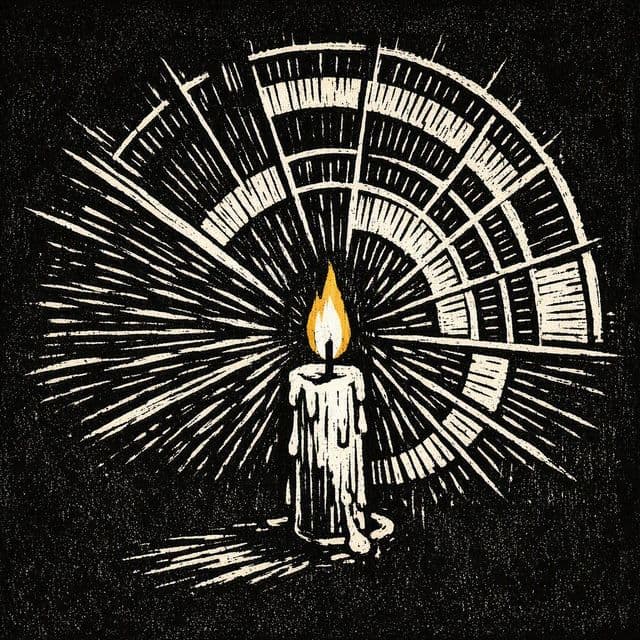
The polar-area diagram used twelve wedges to visualize how sanitary reforms drastically reduced soldier mortality.
Color-coded charts proved that blue wedges for disease dwarfed the red slivers representing battle wounds.
Nightingale used an eight-hundred-page statistical report to bypass bureaucrats and influence Queen Victoria directly.
Improved hospital ventilation and drainage systems were implemented based on data-driven public health analysis.
- 01Intro1 min
- 02The Invisible Massacre2 min
- 03The Anatomy of the Rose3 min
- 04The Statistical Siege2 min
- 05The Legacy of the Coxcomb2 min
- 06Outro1 min
- [PDF] Casualties of War: How Florence Nightingale's Visual Mathematics ...
- Nightingale's Graph - The Engines of Our Ingenuity
- Nightingale's Rose Diagram - Lehigh Library Exhibits
- Complete graph and explanation.
- File:Nightingale-mortality.jpg - Wikimedia Commons
- Feature | Lady with the diagram - Eye Magazine
- [PDF] The radiant diagrams of Florence Nightingale - DataVis.ca
- [PDF] Florence Nightingale - University of St Andrews
- Florence Nightingale, statistics and the Crimean War
- Florence Nightingale, Data Visualization Pioneer
- Florence Nightingale (1820–1910): An Unexpected Master of Data
- Florence Nightingale and Victorian Data Visualisation
- Florence Nightingale: The pioneer statistician - Science Museum
- Nightingale – 1858
Fylom generates episodes like this on any topic you're curious about.
Fylom episodes are researched, written, and voiced by AI. Automated checks help catch inaccuracies, but episodes aren't reviewed by a human and AI can still get things wrong. Treat them as a starting point, not a source of record — more in our accuracy disclaimer.