
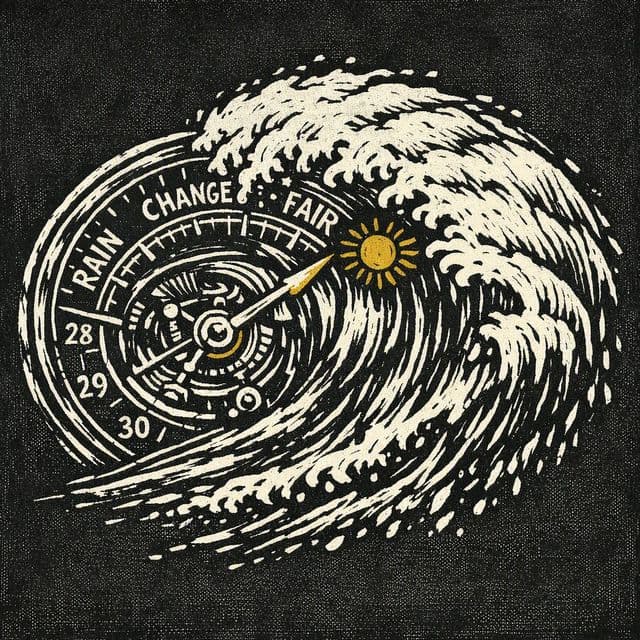
The Weather Window: How James Stagg Forecasted D-Day
In June nineteen forty-four, Group Captain James Stagg identified a narrow break in a brutal Atlantic storm, convincing Eisenhower to launch the Normandy invasion during a marginal twenty-four-hour window. While German forecasters, blinded by a lack of Atlantic data, predicted continued storms, Stagg’s high-stakes gamble on a brief ridge of high pressure decided the timing of the largest amphibious assault in history.
Listen in the Fylom app.
Allied forces required a specific alignment of a late-rising moon and low tide at first light.
Allied control of western observation networks provided superior pressure data compared to German weather services.
German commanders abandoned their posts for trips and war games because they predicted storms would persist.
James Stagg identified a brief high-pressure ridge that allowed for a narrow window of fair weather.
A delay beyond June sixth would have pushed the invasion back two weeks, risking German detection.
Conditions deteriorated into gale-force winds by June seventh, making the twenty-four hour window critical for success.
- 01Intro1 min
- 02The Meteorological Gatekeeper2 min
- 03The Storm and the Postponement2 min
- 04The Atlantic Blind Spot2 min
- 05The Ridge of Hope2 min
- 06A Narrow Escape1 min
- 07Outro1 min
- Three Days in June - D-Day Forecast
- How a weather forecast made history - the D-Day Landings
- Right for the Wrong Reason?: A New Look at the 6 June 1944 D-Day Forecast by a Neutral Swede
- How our weather advice influenced D-Day and Operation ...
- James Stagg: The weatherman who turned the tide of D-Day
- The D-Day weather forecast that changed World War Two
- James Stagg
- Weather forecasting for Operation Overlord - Wikipedia
- D-Day - the most important weather forecast in history - Met Office
- Group Captain Sir James Stagg's Papers
- VogtD-DayInvasionS.doc
- [PDF] 8. Sverre Petterssen, the Bergen School, and the Forecasts for D-Day
- James Stagg's D-Day Forecast Pushed Eisenhower to Delay the ...
- Die Wettervorhersage für den D-Day
- Wetter und Klima - Deutscher Wetterdienst - Thema des Tages - Die Macht des Wetters Teil 2
Fylom generates episodes like this on any topic you're curious about.
Fylom episodes are researched, written, and voiced by AI. Automated checks help catch inaccuracies, but episodes aren't reviewed by a human and AI can still get things wrong. Treat them as a starting point, not a source of record — more in our accuracy disclaimer.