
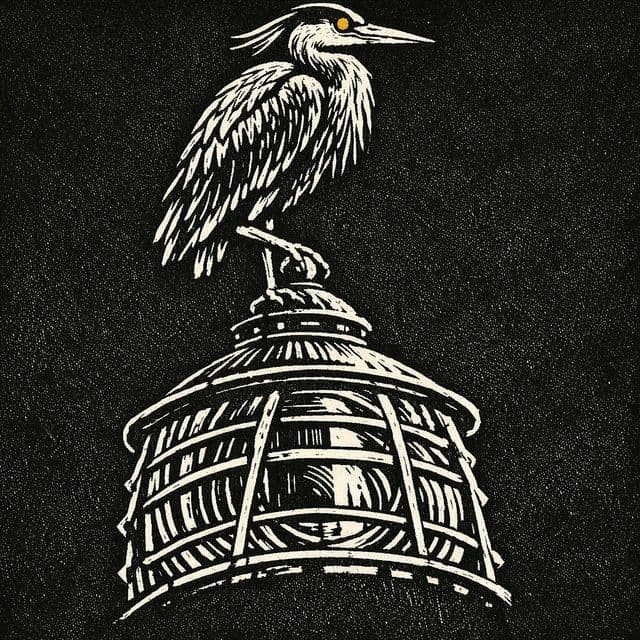
The Darkened Lens: The Battle for Egmont Key
During the American Civil War, the struggle for Florida’s coast turned lighthouses into tactical weapons. On Egmont Key, a keeper caught between two fires saw his light extinguished not by nature, but by a calculated effort to blind the Union blockade.
Listen in the Fylom app.
Lighthouse keeper George Richards collaborated with Confederate sympathizers to sabotage the Egmont Key lighthouse.
Confederate forces stole the Fresnel lens to darken the bay and hinder Union naval navigation.
Union warships required functional lighthouses to safely navigate deep-drafted vessels through treacherous coastal waters.
Confederates repurposed high stone lighthouse pillars as military observation posts for reconnaissance.
Blockade runners used coded lanterns and beach fires to navigate channels in total darkness.
The Union deployed lightships to replace damaged towers, though eleven were lost in Southern waters.
- 01Intro1 min
- 02The Keeper of Egmont Key3 min
- 03The Strategy of Darkness2 min
- 04The Blockade Runner's Paradox2 min
- 05The Union Response and the Cost of War2 min
- 06Outro1 min
- The Confederate States Lighthouse Bureau by David Cipra | United ...
- "A Gang Of Pirates": The Confederate Lighthouse Raids in Southeast
- Egmont Key during the Civil War | Tampa Historical
- Paradise Lost: Florida's Egmont Key during the Civil War - The Journal of the Civil War Era
- Florida's role in Civil War larger than in history books
- [PDF] Loxahatchee Quarterly, Vol 1, No.2
- The Long Blue Line: Lighthouse Service during the Civil War
- Perpetual Beacons? Lighthouses & The Civil War
- The Blockade Runners
- Lighthouses: Guarding the Coasts - Googleapis.com
- Fort Fisher
- US Marines in Battle - Fort Fisher
- UNCLASSIFIED
- The Confederate Blockade Runners
Fylom generates episodes like this on any topic you're curious about.
Fylom episodes are researched, written, and voiced by AI. Automated checks help catch inaccuracies, but episodes aren't reviewed by a human and AI can still get things wrong. Treat them as a starting point, not a source of record — more in our accuracy disclaimer.