
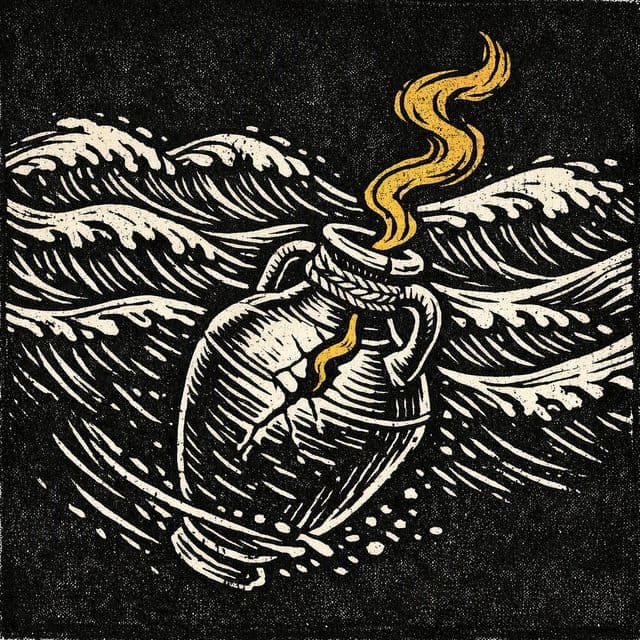
The Byzantine Recipe That Died With Its Makers
For centuries, Greek Fire let the Byzantine Empire incinerate enemy fleets on the water, and the formula was guarded so ruthlessly that no one alive today knows how it was made. This episode traces how a single military secret propped up an empire — and how obsessive secrecy erased the knowledge forever. It's a story about the strange fragility of technology that lives only in a few heads.
Listen in the Fylom app.
Greek fire transformed naval warfare by burning on water and negating traditional firefighting methods.
Byzantine ships used pressurized bronze siphons shaped like lions to project liquid flames.
The weapon relied on a sticky mixture of naphtha, resins, sulfur, and bitumen.
Emperor Constantine the Seventh framed the technology as a divine gift to ensure total secrecy.
Oral transmission and closed workshops prevented leaks but eventually led to the technology's permanent loss.
The extinction of Greek fire illustrates how total concealment can cause innovation to evaporate forever.
- 01Intro1 min
- 02The Liquid Terror of the Bosporus2 min
- 03The Chemistry of a Ghost3 min
- 04The Imperial Monopoly2 min
- 05The Fragility of Silence2 min
- 06Outro1 min
- Reconstructing the Lost Recipe of Greek Fire: Byzantine Warfare ...
- Greek fire | Byzantine, Naval Warfare, Incendiary - Britannica
- Greek Fire: The “Liquid Flame” That Saved Byzantium | Burned Fleets on the Sea
- (PDF) Greek Fire Reconstruction - Academia.edu
- Greek Fire as a Case Study in Ancient and Medieval Chemical ...
- FASCICULI ARCHAEOLOGIAE HISTORICAE
- The Scientific Challenges of Recreating Greek Fire Today
- Greek Fire: Analyzing the Mysterious Chemical Weapon Used by the Byzantines
- 1911 Encyclopædia Britannica/Greek Fire
- Greek fire | Royal Museums Greenwich
- Craft Knowledge at the Interface of Written and Oral Cultures
- View PDF
Fylom generates episodes like this on any topic you're curious about.
Fylom episodes are researched, written, and voiced by AI. Automated checks help catch inaccuracies, but episodes aren't reviewed by a human and AI can still get things wrong. Treat them as a starting point, not a source of record — more in our accuracy disclaimer.